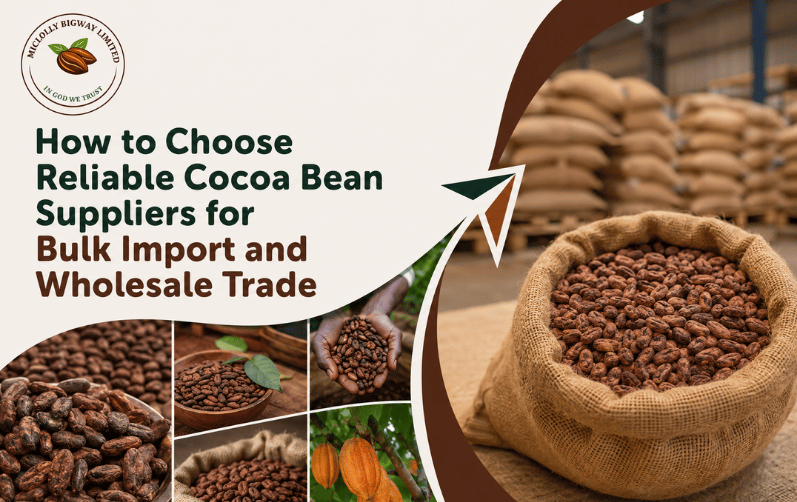
Navigating the complexities of international agricultural trade requires precision, foresight, and a network of trustworthy partners. For food and beverage manufacturers, commercial bakeries, and large-scale chocolatiers operating in 2026, securing a stable supply of raw materials is a critical pillar of business success. Among these commodities, cocoa stands out as one of the most volatile yet universally demanded ingredients on the planet.
Whether you are procuring ingredients for a mass-market confectionery line or a premium health-food brand, the quality of your end product is entirely dependent on the integrity of your raw materials. Consequently, identifying and partnering with a top-tier cocoa beans supplier is not just a procurement task—it is a strategic business decision.
In this comprehensive guide, Miclolly Bigway breaks down the essential criteria for selecting reliable cocoa bean suppliers, the nuances of international quality standards, and the logistical realities of importing wholesale cocoa beans in today's dynamic B2B landscape.
The Growing Demand for Bulk Cocoa Beans
The global appetite for cocoa continues to expand, driven by a convergence of traditional consumption and emerging market trends. As we progress through 2026, the demand for bulk cocoa beans is surging beyond the traditional chocolate bar.
Today’s commercial buyers are sourcing cocoa for a vast array of applications. The health and wellness sector is heavily utilizing antioxidant-rich dark cocoa powders for protein shakes and dietary supplements. Simultaneously, the cosmetic and pharmaceutical industries are purchasing massive volumes of cocoa to extract high-grade cocoa butter for skincare products.
Furthermore, the rise of digital B2B marketplaces has made global procurement more accessible, allowing buyers to connect directly with international suppliers. However, this accessibility also brings an influx of unverified sellers. As demand scales, the premium on finding vetted, reliable cocoa exporters who can deliver consistent, commercial-grade volume without compromising on quality has never been higher.
What Importers Should Look for in Cocoa Suppliers
When importing wholesale commodities, the stakes are exceptionally high. A single compromised container can disrupt production schedules and impact your bottom line. To mitigate these risks, importers must conduct rigorous due diligence when vetting a potential cocoa beans supplier. Here are the critical traits to evaluate:
-
Supply Chain Transparency and Traceability: Modern consumers demand ethical sourcing, and regulatory bodies are strictly enforcing traceability. A reliable supplier should be able to map their supply chain, demonstrating exactly where the beans are cultivated and ensuring fair labor practices are maintained at the farm level.
-
Scalable Volume Capacity: Can the supplier grow with your business? If your Q3 production requires triple the volume of your Q1 output, your supplier must have the agricultural network and financial stability to fulfill those scaled purchase orders without delays.
-
Consistent Quality Control (QC): Consistency is the bedrock of commercial food manufacturing. Your supplier must have standardized, documented QC protocols in place at the origin to ensure that the flavor profile, bean size, and moisture content of the first shipment perfectly match the tenth.
-
Online Reputation and References: In the modern B2B ecosystem, a supplier's reputation is highly visible. Savvy buyers will look beyond a polished website, checking international trade directories, verifying corporate registrations, and seeking out references from other global buyers to confirm the supplier's reliability.
-
Responsive Communication: International trade spans multiple time zones and complex logistical hurdles. A supplier that communicates proactively about harvest yields, shipping schedules, and potential delays is an invaluable partner.
Quality Standards in International Cocoa Trade
In the realm of wholesale cocoa beans, "quality" is not a subjective term; it is quantified through strict international grading standards. Before finalizing any bulk purchase, buyers must ensure their supplier adheres to these measurable metrics:
The Cut Test
This is the universal standard for assessing cocoa bean quality. A random sample of beans (typically 300) is cut in half lengthwise to inspect the interior.
-
Fully Fermented Beans: These will have a deep brown, ridged interior, indicating excellent flavor potential.
-
Slaty Beans: These are unfermented beans that appear grayish and flat. They will produce a harsh, bitter flavor and must be kept to an absolute minimum (typically under 3% for high-grade cocoa).
-
Defective Beans: The cut test also reveals moldy or insect-damaged beans. Top-tier suppliers enforce strict limits on these defects, ensuring the shipment meets Grade 1 or Grade 2 export standards.
Moisture Content
Proper drying is non-negotiable. The ideal moisture content for raw cocoa beans is tightly regulated at 7% to 8%. Beans with a moisture content above 8% are at severe risk of developing mold during maritime transit, while beans dried below 6% become excessively brittle, leading to a high percentage of broken beans (nibbling) which degrades commercial value.
Bean Size and Count
Manufacturers calibrate their roasting equipment based on bean size. A reliable supplier will use grading screens to ensure a uniform bean size within a shipment, usually measured by the number of beans per 100 grams.
Certifications and Export Documentation
Navigating international customs requires flawless paperwork. Delays at the port of entry due to missing documents can result in massive demurrage fees and degraded cargo. Premier cocoa exporters provide comprehensive, error-free documentation for every shipment.
Essential export documents include:
-
Commercial Invoice & Packing List: Detailing the exact volume, value, and packaging specifications of the shipment.
-
Bill of Lading (B/L): The legally binding contract of carriage between the shipper, carrier, and receiver.
-
Phytosanitary Certificate: Issued by the agricultural authority of the exporting country, proving the raw agricultural product has been inspected and is free from quarantine pests and diseases.
-
Certificate of Origin: Crucial for determining import tariffs and trade agreement benefits.
-
Fumigation Certificate: Certifying that the shipping container and pallets have been properly treated to prevent pest infestations.
Additionally, industry certifications such as Fairtrade, Rainforest Alliance, or Organic credentials add immense commercial value. A supplier capable of providing certified beans allows importers to market their final products at a premium price point to conscientious consumers.
Packaging and Shipping Considerations
The journey from a tropical processing facility to a manufacturer's warehouse is fraught with environmental risks. Even the highest-quality beans can be ruined by improper packaging.
Traditionally, bulk cocoa beans are shipped in breathable jute (burlap) bags, typically holding 60kg to 65kg. While jute remains the industry standard due to its breathability, advanced exporters are increasingly lining these bags with specialized, hermetic GrainPro bags. These liners protect the beans from absorbing ambient moisture and external odors while preventing insect infestations.
Furthermore, ocean freight exposes containers to extreme temperature fluctuations, causing "container rain" or condensation. Reliable suppliers understand this physics and take preventative measures, such as lining the shipping containers with heavy-duty Kraft paper and hanging industrial desiccants (moisture-absorbing poles) to protect the cargo during transit.
Common Challenges in Cocoa Bean Imports
Even with the best preparation, importing agricultural commodities involves navigating inherent challenges. The global cocoa market is highly susceptible to macro-environmental factors:
-
Climate Volatility: El Niño weather patterns and shifting rainfall in key producing regions can drastically impact harvest yields, leading to sudden supply shortages.
-
Price Fluctuations: Cocoa is a globally traded commodity subject to intense speculation on futures markets. Prices can swing wildly based on geopolitical events, currency valuations, and agricultural forecasts.
-
Logistical Bottlenecks: Port congestions, container shortages, and fluctuating freight rates can disrupt delivery timelines and increase landed costs.
Understanding these challenges highlights the necessity of working with a supplier who acts as a strategic partner, offering forward-contracting options to lock in pricing and utilizing established logistics networks to bypass predictable supply chain bottlenecks.
Why Global Buyers Prefer Experienced Cocoa Exporters
To insulate themselves from these market volatilities and logistical nightmares, leading food manufacturers and importers deliberately bypass inexperienced middlemen, choosing instead to partner with seasoned cocoa exporters.
Experienced exporters act as a bridge between the agricultural realities of the origin country and the stringent compliance requirements of the destination market. They have boots on the ground to inspect the crops, the financial infrastructure to aggregate large volumes, and the logistical expertise to manage complex international freight forwarding.
Partner with Miclolly Bigway
At Miclolly Bigway, we understand that our clients aren't just buying a commodity; they are buying reliability, consistency, and peace of mind. As a premier cocoa beans supplier, we have optimized our end-to-end B2B operations to serve the exacting needs of global importers.
From rigorous quality control and flawless export documentation to securing the most efficient shipping routes, Miclolly Bigway is dedicated to fueling your manufacturing success with the world's finest bulk cocoa beans. When you partner with us, you are securing a resilient supply chain designed to thrive in the modern international marketplace.