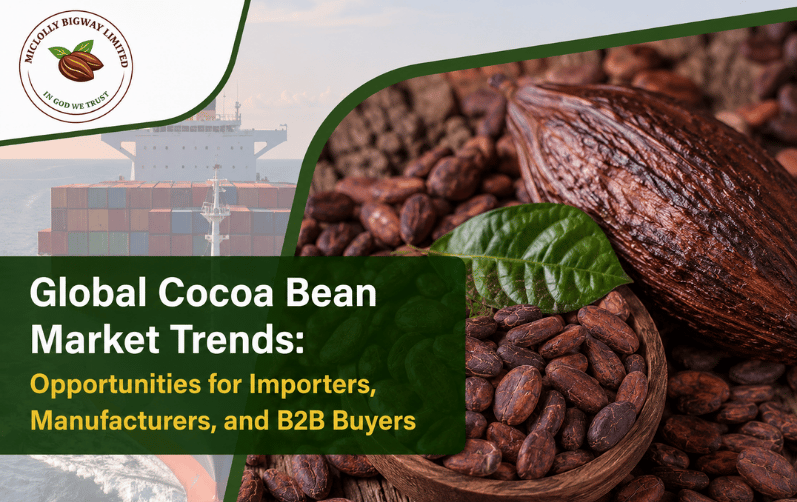
The world’s insatiable appetite for chocolate, decadent baked goods, and luxurious cosmetics all begins with a single, humble ingredient: the cocoa bean. As we navigate through 2026, the global cocoa industry is undergoing a significant transformation. Driven by shifting consumer preferences, climate considerations, and the rise of the premium "bean-to-bar" movement, the demand for high-quality cocoa is more robust—and more complex—than ever before.
Whether you are a master chocolatier, a food and beverage manufacturer, or an importer looking to navigate the complexities of international trade, understanding the nuances of cocoa is essential. In this comprehensive guide brought to you by Miclolly Bigway, we will dive deep into the fascinating world of cocoa beans, exploring their botanical varieties, intricate processing methods, and the factors driving global market demand in 2026.
What Are Cocoa Beans?
Cocoa beans are the dried and fully fermented seeds of the Theobroma cacao tree, a species whose name literally translates from Greek to "food of the gods." Native to the deep, tropical regions of Mesoamerica, these trees thrive in a narrow band around the equator, requiring a highly specific climate characterized by high humidity, abundant rainfall, and a canopy of shade.
A mature cocoa tree produces large, vibrant, football-shaped pods that grow directly from its trunk and main branches. Inside each pod lies a sweet, tart, white mucilaginous pulp that encases anywhere from 30 to 50 seeds. These seeds, once extracted, fermented, and dried, become the raw cocoa beans that serve as the foundational building blocks for every chocolate and cocoa product on the planet.
Major Types of Cocoa Beans
Not all cocoa is created equal. The flavor profile, aroma, and commercial value of cocoa heavily depend on the botanical variety of the tree. While there are numerous sub-varieties and wild strains, the commercial market primarily categorizes cocoa into three major types:
1. Forastero (The Bulk Cocoa)
Originating from the Amazon basin, Forastero is the workhorse of the global cocoa industry, accounting for approximately 80% to 90% of the world's total production. Known for its hardiness, high yield, and resistance to disease, Forastero beans produce a strong, classic "chocolate" flavor that is earthy and robust. While it lacks the delicate flavor notes of premium varieties, it is the fundamental base for most mass-market chocolates and cocoa powders.
2. Criollo (The Fine Flavor Cocoa)
Criollo is the rarest, most prized, and most expensive of all cocoa varieties, representing roughly 1% to 5% of global production. Grown predominantly in Central and South America, the Criollo tree is notoriously difficult to cultivate, producing lower yields and remaining highly susceptible to environmental threats and diseases. However, the resulting beans are exceptionally high-quality. Criollo cocoa boasts a complex, delicate flavor profile with secondary notes of caramel, nuts, vanilla, and red fruits, lacking the harsh bitterness often found in bulk beans.
3. Trinitario (The Hybrid Cocoa)
Trinitario is a natural crossbreed between the hardy Forastero and the delicate Criollo, originating in Trinidad after a devastating hurricane wiped out local Criollo crops in the 18th century. Representing about 5% to 10% of global production, Trinitario offers the best of both worlds: the robust growing characteristics and higher yields of Forastero, combined with the nuanced, fine-flavor profiles of Criollo. It is heavily utilized by premium chocolate manufacturers who seek both quality and agricultural reliability.
How Cocoa Beans Are Processed
The journey from a fresh pod hanging on a tropical tree to a rich, aromatic ingredient is highly labor-intensive and requires meticulous attention to detail. Proper cocoa processing is just as important as the bean's genetics in determining the final flavor.
1. Harvesting: Cocoa pods ripen at different rates, meaning they must be harvested by hand. Farmers use machetes or specialized knives attached to long poles to carefully remove the pods without damaging the delicate tree trunk.
2. Pod Breaking and Extraction: Once harvested, the pods are cracked open, and the wet beans—still covered in their sticky, sugary white pulp—are scooped out by hand.
3. Fermentation: This is arguably the most critical step in flavor development. The wet beans are placed in large wooden sweatboxes or heaped under banana leaves for five to seven days. Naturally occurring yeast and bacteria consume the sugars in the pulp, creating an exothermic reaction that raises the temperature significantly. This process stops the seed from germinating, breaks down the bitter tannins, and develops the complex chemical precursors required for chocolate flavor.
4. Drying: After fermentation, the beans must be dried to reduce their moisture content from around 60% to a stable 7%. They are typically spread out on large wooden trays or concrete patios under the tropical sun. Proper drying prevents mold growth during transit.
5. Roasting and Winnowing: Once the dried beans reach manufacturing facilities, they are roasted to fully develop their chocolate aroma and flavor. Following roasting, a process called winnowing cracks the beans and uses air currents to blow away the papery outer husks, leaving behind the pure, edible "cocoa nibs."
6. Grinding: The nibs are then heavily ground. Because they are comprised of roughly 50% fat (cocoa butter), the grinding friction transforms the solid nibs into a thick, flowing paste known as cocoa liquor or cocoa mass, the ultimate base for chocolate making.
Top Cocoa Producing Countries
The global supply chain of cocoa is heavily concentrated in specific geographical regions that offer the ideal equatorial climate.
-
West Africa: Ivory Coast (Côte d'Ivoire) and Ghana are the undisputed titans of the cocoa world, collectively producing over 60% of the global supply. They primarily cultivate Forastero beans.
-
South and Central America: Countries like Ecuador, Peru, and the Dominican Republic are renowned for producing the lion's share of the world's "fine flavor" cocoa (Criollo and Trinitario). Ecuador, in particular, is famous for its unique Arriba Nacional beans.
-
Southeast Asia: Indonesia is a major player, often ranking as the third or fourth largest producer globally, known for providing bulk beans essential to the Asian manufacturing markets.
Uses of Cocoa Beans in the Food & Beverage Industry
While the immediate association with cocoa is chocolate bars, the applications of processed cocoa beans within the food and beverage industry are vast and multifaceted.
-
Chocolate Confectionery: From bitter 90% dark chocolate to creamy milk chocolate and truffles, cocoa liquor and added cocoa butter are the primary ingredients.
-
Beverages: Cocoa powder (made by pressing the fat out of cocoa liquor) is heavily used in hot chocolate mixes, ready-to-drink chocolate milks, mochas, and protein shakes.
-
Baking and Desserts: Cocoa powder is a staple in bakeries for cakes, brownies, cookies, and frostings.
-
Cosmetics and Pharmaceuticals: Cocoa butter, extracted from the bean, is highly valued outside the food industry. Because it melts exactly at human body temperature, it is a luxurious base for premium lotions, lip balms, and skincare products.
How to Choose Reliable Cocoa Bean Suppliers
For food manufacturers, craft chocolatiers, and large-scale importers, securing a steady stream of high-quality raw material is paramount. But how do you identify the right cocoa bean suppliers?
1. Quality Assurance and Testing: A reliable supplier should be transparent about their bean quality. Look for suppliers who conduct rigorous "cut tests" to check fermentation levels and strictly monitor moisture content to ensure beans do not arrive moldy or over-dried.
2. Supply Chain Transparency: Modern consumers care deeply about where their food comes from. Partner with suppliers who can trace their beans back to specific regions or cooperatives, ensuring ethical labor practices and sustainable farming.
3. Consistency and Volume: Depending on your business size, you need a supplier capable of meeting your volume demands without fluctuating wildly in flavor profile or bean size from shipment to shipment.
4. Certifications: Look for suppliers who can provide certified beans, such as Fairtrade, Rainforest Alliance, or Organic, which not only guarantee certain ethical and environmental standards but also add premium marketing value to your final product.
Why Businesses Source Cocoa Beans Internationally in 2026
The landscape of the cocoa market in 2026 presents unique challenges and opportunities. Recent years have seen volatile weather patterns affecting crop yields in West Africa, leading to supply constraints and price fluctuations. Consequently, businesses are increasingly looking to diversify their sourcing strategies to mitigate risk.
Sourcing internationally through experienced cocoa exporters allows businesses to access a wider variety of flavor profiles to meet the surging consumer demand for premium, single-origin chocolates. Furthermore, working with global exporters provides a buffer against localized crop failures. In 2026, companies are prioritizing resilient supply chains, seeking out exporters who have deep relationships with farmers across multiple continents, ensuring a continuous, high-quality flow of raw materials regardless of regional disruptions.
Conclusion
The journey of the cocoa bean—from a delicate flower on a tropical tree to a globally traded commodity—is a testament to the intricate networks of agriculture, processing, and international trade. As global demand continues to evolve in 2026, understanding the nuances of different bean types, processing methods, and market dynamics is crucial for any business operating within this space.
At Miclolly Bigway, we pride ourselves on our deep industry knowledge and our commitment to connecting businesses with the finest raw cocoa beans the world has to offer. By prioritizing quality, ethical sourcing, and reliable supply chains, we ensure that our partners are perfectly positioned to meet the demands of the modern consumer and craft the exceptional cocoa products of tomorrow.